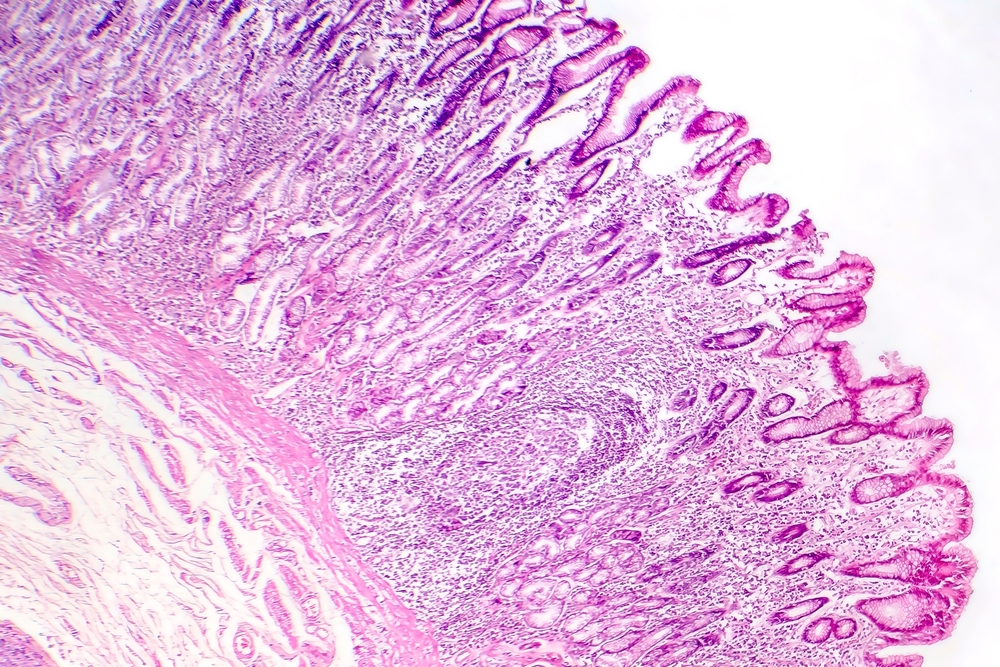

The immune drug era may replace the antibiotic era
[PharmVestnik # 20, 13/06/2017, p. 6]
Moscow and Mexico to exchange public health development experience
On June 5th, a memorandum of cooperation in healthcare was signed between Moscow and Mexico. The signatories noted a similarity of the problem scope and public health development courses of the two capitals, and apparent benefits of experience exchange.
[PharmVestnik # 20, 13/06/2017, p. 7]
Nanotechnologies may help in cancer management
Russian scientists offered certain R&D results in the field of applied medical nanotechnologies aimed at reducing side effects of cancer treatment. On June 1st, scientists of Moscow Institute of Steel and Alloys, a national research technology institute, presented a nano encapsulated delivery system for chemotherapeutic agents along with tumor margin marking, and therapeutic implants.
[PharmVestnik # 20, 13/06/2017, p. 8]
Officials and medical manufacturers considered new medical device registration regulations
Within the framework of a special workshop on medical device registration in the light of new EAEU legislation (June 8, Moscow), officials of the Federal Service for Surveillance in Healthcare and Social Development and Eurasian Economic Commission explained to businesses the new regulations that would become mandatory for the EAEU members from 2022.
[PharmVestnik # 20, 13/06/2017, p. 9]
MoH continues registering prices of generics of originator drugs still under patents
In Russia, prices were registered for at least three generics of originator drugs that were still under patents. From the legislative perspective, it is not quite clear what a genetic manufacturer is after acting like that. The thing is that 3 years after a marketing authorization is issued, the drug registration may be cancelled if the drug has not been launched into civil circulation.
[PharmVestnik # 20, 13/06/2017, p. 11]
Technologies provide for developing innovative drugs in Russia
Pharma is full of opposing things like being scrupulous and unscrupulous, white and black. At times, it looks like everybody is engaged in creating and selling pseudo-medicines. But there are bright drugs that really save lives. They bring out authentic emotions.
[PharmVestnik # 20, 13/06/2017, p. 12]
Anti-cartelism moves to a new level
According to the Federal Antimonopoly Service (FAS), pharmaceuticals and medical devices rank high on the list of commodity markets most exposed to cartel agreements. Head of FAS Anti-Cartel Department Andrey Tenishev emphasizes that price fixing in the government drug procurement may reach about 50%. Recently, the FAS presented a multiparameter cartel identification system for e-bidding. This software provides for pinpointing and proving e-bidding cartelism in any region or industry. Certain time is required before the efficacy of this approach will be assessed. However, already today it is obvious that anti-cartel fight requires novel, improved approaches.
[PharmVestnik # 20, 13/06/2017, p. 13]
Government drug procurement, Q117
The government drug biddings in Russia are analyzed from a perspective of winners, customers, bidding types, regional specifics, etc.
[PharmVestnik # 20, 13/06/2017, pp. 14-15]
Main pharma issues discussed at St. Petersburg Economic Forum
Export orientation, support of innovations, and predictability of the regulatory segment development currently permeate all pharma industry-specific discussions, including those within the framework of St. Petersburg Economic Forum.
[PharmVestnik # 20, 13/06/2017, p. 18]
Stavropol territory to produce medical-grade gelatin from silver carp’s scale
Stavropol territory announced construction of a collagen and gelatin manufacturing facility. After reaching its full productive capacity, the facility is to manufacture 3 t of collagen daily. Part of the products is to be sold as raw materials to cosmetic companies, and part is to be used for in-house manufacturing of medical devices and functional foods.
[PharmVestnik # 20, 13/06/2017, p. 20]
Export development requires harmonization of manufacturing standards
According to the Ministry of Industry and Trade, the growth rate of medical equipment exported from Russia has been slowing down despite the overall local production growth. At the same time, officials assert unanimously that, without export, the local production will not be able to provide for the GDP increase required, and develop various actions for promoting Russian medical products to foreign markets. A special agency was set up that was ready to virtually completely undertake management of corporate export projects. But something has hampered local medical manufacturers’ development on foreign markets. Experts and government officials discussed promotion of Russian medical products at the conference “Foreign economic activity as a factor of effective development of medical distributors” (May 19, Moscow).
[PharmVestnik # 20, 13/06/2017, p. 23]
Procurement of ultrasound equipment, Q116—Q117
The report indicates that in Q117, in Russia, there was a trend to a decrease of ultrasound machine procurement in value terms year-on-year. Overall for the country, purchases declined by 9.2%, or nearly 100 m RUB.
[PharmVestnik # 20, 13/06/2017, pp. 24-25]
In Moscow, lab equipment purchases reached the limit
Many experts believe that lab medicine will be central for the public health system in future. However, skyrocketing costs are a serious problem even for the leading countries. It becomes clear that bigger budgets will not be a solution; effective cost-saving and optimization tools are required. The latter two were the focus of discussion at the 10th Inter-regional scientific and practical conference “Modern laboratory medicine: efficiency, accessibility, quality”.
[PharmVestnik # 20, 13/06/2017, p. 26]