

// Health IT
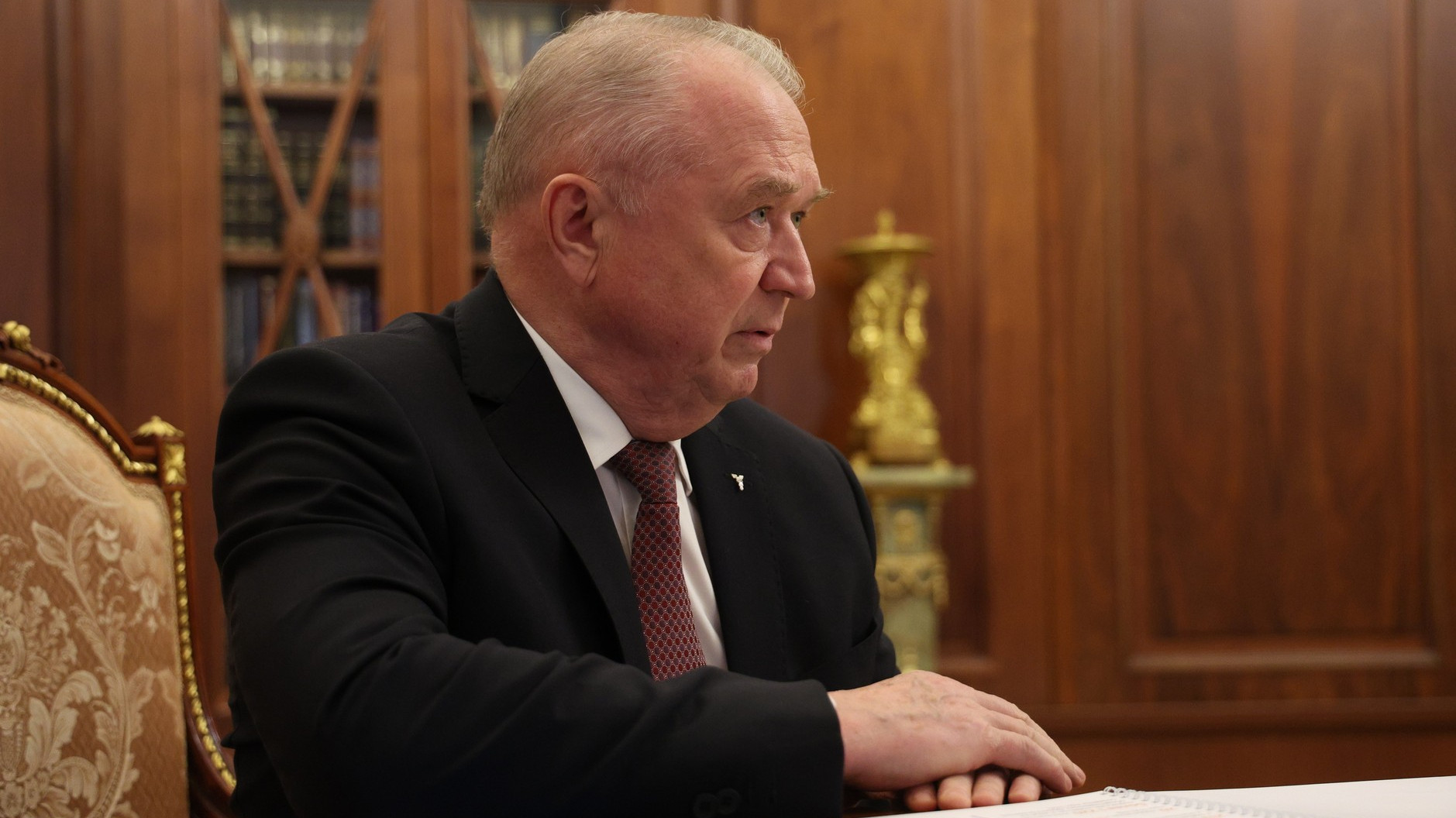
Herman Klimenko urged doctors to keep up with new reality
The Institute for Internet Development (IID) presented a project that, in the developers’ opinion, can make doctors’ work much easier. The software nicknamed the Third-Party Opinion is capable of recognizing pathology in medical images. The IID asserts that this project is currently the most important, and that it embodies telehealth. But there are certain obstacles on its implementation path. The first is money, the second is building understanding with the medical community. According to Russian President Advisor Herman Klimenko, he is let in to hospitals to discuss telehealth solely due to his position.
[PharmVestnik # 31, 03/10/2017, p. 1, cont’d p. 5]
// Pharma Manufacturing
Biocad to manufacture 22 antineoplastics in Moscow in 4 years
When speaking about drug manufacturing centers in Russia, one readily recollects Kaluga, St. Petersburg, and Yaroslavl. It might look that the regions are ahead of the capital in this respect. But Moscow voiced its manufacturing ambitions concerning 22 antineoplastic INNs. Biocad and R-Pharm have fought for the right to fulfil this difficult task, with a win-win outcome.
[PharmVestnik # 31, 03/10/2017, p. 3]
// Budgets & Funding
Growing patient numbers may cause budget gap in 2018
On September 21, when speaking at a meeting of the Subcommittee for Drugs, Pharmaceutical and Medical Industry Development of the State Duma, Subcommittee Chairman Alexander Petrov warned about the forthcoming federal funding gap in respect of the Seven Diseases program and List 24 (orphan diseases).
[PharmVestnik # 31, 03/10/2017, p. 4]
// Regulatory & Legal
Pharma asks FAS for recommendations on advertising legislation execution
It looks like the Federal Antimonopoly Service (FAS) has finally recognized the necessity of helping pharma companies with the development of appropriate adverts. Numerous administrative cases filed against pharma companies in 2017 have set the market to worry. Frequently, when such cases were reviewed, businesses would try to find out the FAS’ stand on a specific regulation. The officials would neither refuse nor be enthusiastic about that. Meantime, the number of cases filed has reached a critical mass when the FAS agreed that something had to be done.
[PharmVestnik # 31, 03/10/2017, p. 6]
// Drug Procurement
Large drug procurement discussed at Trade Exchange
The Trade Exchange was the venue of a public discussion of forthcoming bidding on three drugs hosted by Moscow Competition Policy Department. The bidding was scheduled by the Procurement Agency of Moscow Health Department to be carried out via the unified automated electronic communications network. The department is concerned about the low-level activity of the pharma community at such discussion sites; however, the officials hope that the bidding will be quite competitive.
[PharmVestnik # 31, 03/10/2017, p. 8]
// Events
Pharma market players came clear on direct contracts issue
Direct contacts between manufacturers and pharmacy chains have become a reality, although not on a mass scale yet. However, the trend of making new contracts has become persistent over the past 3 to 4 years. PharmVestnik’s First conference of the PROjections of Future series called “Direct Contract: a Win-Win Solution” looked into the new type of market relationships in the short term.
[PharmVestnik # 31, 03/10/2017, pp. 10-11]
// Pharma Retailing
Pharmacies cannot hope for price wars any longer
In certain Russia’s regions, e.g. Moscow, St. Petersburg, and Nizhny Novgorod, there exist zero-profit pharmacies. Driven by a price advantage approach to attract additional customer traffic, pharmacies cut prices, often without a reason. IT companies are sure that they can help.
[PharmVestnik # 31, 03/10/2017, p. 12]
// Health IT
Telehealth solutions provide new opportunities for medical device market
After the long-awaited telehealth law was approved, experts divided in their opinions on its efficiency. Some criticize the document for being too general offering band-aid solutions, especially concerning the fact that a doctor has no tools for making a diagnosis or assigning treatment. Other believe that approving such law is good as it provides new opportunities. A bright view of IT-based health management was presented at the 18th All-Russia Forum “Medical Device Circulation in Russia: Device- and Health Providers”.
[PharmVestnik # 31, 03/10/2017, p. 14]
// Health IT
Telehealth segment players concerned about lack of by-laws
As the telehealth law effective date approaches, and by-law approval is being postponed, IT companies start enthusiastically form various associations and generate bills. Unlike them, experts are pessimistic and apprehensive of seeing underworked by-laws by the New Year.
[PharmVestnik # 31, 03/10/2017, p. 15]
// R&D
State corporations plan developing nanopharmaceuticals
In mid-September, two large corporations made ambitious statements. Rostec announced the development of digital drugs, and Rusnano introduced a nanopharmaceutical segment set to grow to 100B RUB in the next 10 years. While “digital drugs” were an unfortunate slip of Rostec’s media office, nanopharmaceuticals may be granted a legitimate legal status shortly. However, expert opinions have divided.
[PharmVestnik # 31, 03/10/2017, p. 16]
// Insight
Overpriced VED imports
According to RNC Pharma, in January–August 2017, one in each eleven VED supplies was found to exceed State Register Prices. In total, 10.2% of the VED imports to Russia since the beginning of the year were overpriced. Such supplies involve 156 trademarks by 60 manufacturers, which represents 1 in 6 importers operating on the Russian market, including the industry leaders.
[PharmVestnik # 31, 03/10/2017, pp. 18-19]
// Pharma Retailing
Ural pharmaceutical retailers against fraud frontline pharmacists
Pharmacy chains hiring pharmacists without proper education take over the market faster than their competitors recruiting adequately trained specialists. The Ural pharmaceutical retailers surveyed by PharmVestnik believe that the latest amendments to the licensing regulations will put an end to impostors.
[PharmVestnik # 31, 03/10/2017, p. 23]
// Regulatory & Legal
Law allows different generic and originator drug PILs
A patient was refused to be provided with an originator drug to which he had responded because the manufacturer included an additional contraindication to the PIL. Nonetheless, the generic PIL has remained unchanged.
[PharmVestnik # 31, 03/10/2017, p. 23]
// Medical Manufacturing
Why Russian implants and prosthetic devices are little used in clinical practice
In the Russian medical industry, the import substitution program has not resulted in a growth of percentage of local devices used in healthcare yet. By various estimates, local products account for 2 to 10% of the medical device segment. BioTechMed conference held in Gelendzhik on September 14-15 was used by doctors, businesses, and regulators as a discussion site for traumatology and orthopedic device trends and obstacles preventing local medical manufacturers from competing on an equal footing with foreign companies.
[PharmVestnik # 31, 03/10/2017, p. 27]
// Insight
State procurement of mammography machines in Russia, January 2014 — June 2017
According to Deputy Prime Minister Olga Golodets, the cancer mortality rate in Russia is higher than in industrially developed countries. Cancer ranks second (15.6%) among the population death causes. Up to date, 3,5M Russian were diagnosed with cancer. The report presents Medconsult analytical data.
[PharmVestnik # 31, 03/10/2017, p. 28]