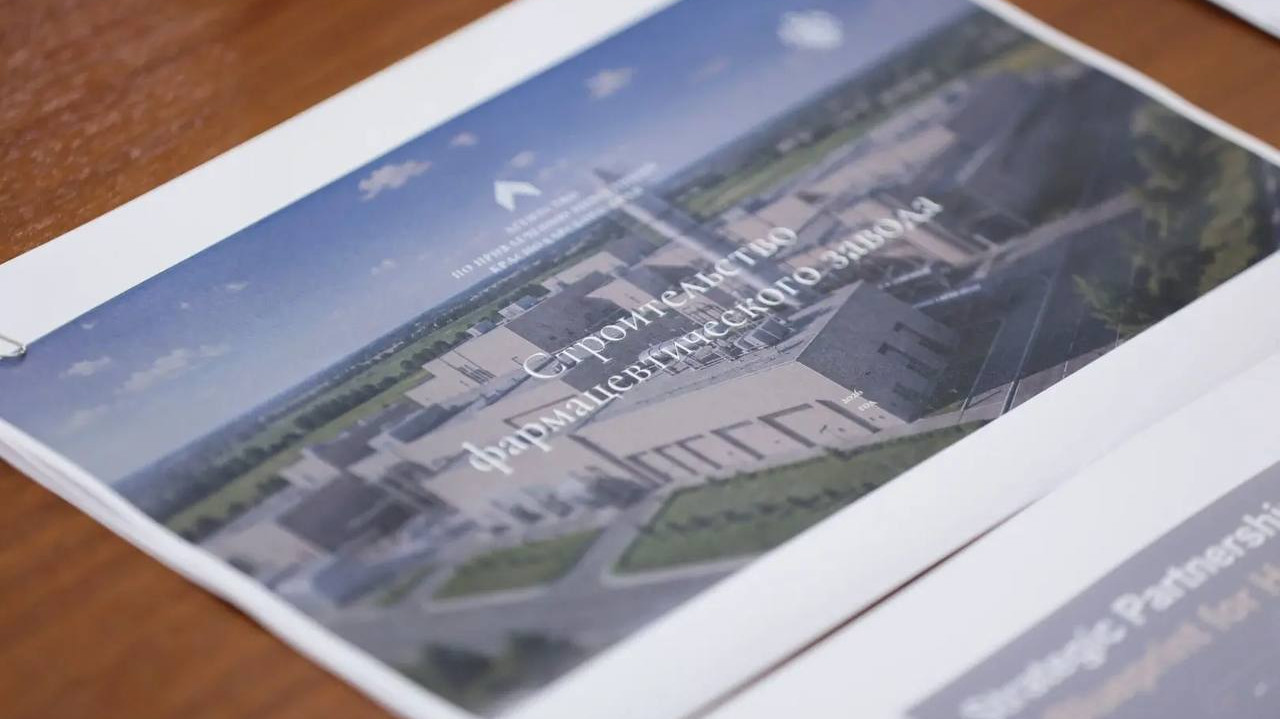

Fiscal discipline of vaccine manufacturer Fort not to trigger questions
[PharmVestnik # 12, 11/04/2017, p. 1, cont’d p. 5]
Expert opinion on innovative medicine development in Russia
The Public Chamber hosted a roundtable “Medicine of the future; science and technologies”. Experts representing Rusnano and other innovation institutes noted that the gap between Russia and leading counties in the field of innovative pharmaceuticals keeps growing. On the other hand, there are growth points as well, and if the government invests effort, a contribution can be made in longer life expectancy, and better quality of life.
[PharmVestnik # 12, 11/04/2017, p. 2]
Industrial clusters wait for fair government support
Industrial clusters operating in Russia temporarily stopped receiving federal funding. One funding program has been completed, while the other has not come into effect yet. As a result, e.g., in Kaluga Pharmaceutical Cluster, the project aimed at creating an educational center for the cluster participants has been suspended. At the same time, there are not only infrastructural issues on the agenda. The market players are mostly concerned with the opportunities of selling pharmaceuticals manufactured.
[PharmVestnik # 12, 11/04/2017, p. 3]
Ministry of Industry and Trade to subsidize pediatric drug manufacturers
Drafts amendments to the resolution describing the rules of allocating federal subsidies for local pharmaceutical manufacturers within the framework of the government program Pharma-2020 have been subjected to public hearings. In particular, it is proposed to subsidize setting up of pediatric drug manufacture projects. An impetus for drafting this document has been given by Premier Dmitry Medvedev’s assignment. Experts comment that large pharma companies that already have relevant manufacturing capacities may be potentially interested in this segment. However, the Ministry of Health interjects that the pediatric drug production issue has been burning for a long time, but businesses consider manufacture of pediatric dosage forms unprofitable. According to DSM Group, purely pediatric drugs currently selling at pharmacies account for approx. 1% of total sales.
[PharmVestnik # 12, 11/04/2017, p. 4]
Government and experts seek for optimum drug pricing and price regulation system
The drug price regulation reform as well as new interaction scenarios between the Ministry of Health, regional authorities, and drug manufacturers have been triggered by a shortage of funding. The government is gradually targeting advanced drug coverage methods as those existing are low effective. According to the Health Economics Institute, a Moscow's Higher School of Economics affiliate, approx. 120 bn RUB are spend inadequately in the beneficiary drug coverage system.
[PharmVestnik # 12, 11/04/2017, p. 6]
Pharma business get ready to enter Eurasian market
On April 5th, Armenia’s joining to the Agreement on Common Principles and Regulations of Drug Circulation on the EAEU Market was ratified. On April 10th, the Federal Law No. 25 on amendments to the Russian Tax Code setting state drug registration duties aimed at the formation of an EAEU common drug market came into force with minor exemptions. The authorities and pharma community discussed the relevant prospects on March 29th at the 9th conference “Government regulation and Russian pharmaceutical industry — 2017: the dialogue continued”.
[PharmVestnik # 12, 11/04/2017, p. 10]
Russian and Uzbekistan pharma industries have mutual interests
Within the framework of the preparation of the visit to Russia of Uzbekistan new President Shavkat Mirziyoyev to meet with Russian President Vladimir Putin, PharmVestnik Editor-in-Chief visited the Republic of Uzbekistan on the invitation of Russia’s largest pharmaceutical exporter Interlek and Uzbekistan state corporation Uzpharmsanoat. The Editor-in-Chief's aim was to find out the local pharma market priorities, and Russian pharma prospects in Uzbekistan.
[PharmVestnik # 12, 11/04/2017, p. 15]
Analysis of drug prescription by doctors of different specialties
The total number of drugs used in all treatment regimens differs basically threefold in doctors of different specialties. This was documented in the PrIndex research “Monitoring of physicians’ drug prescription practices” conducted by Ipsos Healthcare in autumn 2016.
[PharmVestnik # 12, 11/04/2017, p. 16]
Monitoring of drug procurement pursuant to Federal Law No. 44, 2016
As of 2016, completed drug biddings pursuant to the Federal Law No. 44 “On the contract system in the field of procurement of goods, works, and services to meet federal and municipal needs” totaled 304.7 bn RUB, 7% up year-on-year (YOY). Savings totaled approx. 13% vs. the initially quoted bidding prices. Purchases increased by 8% to 282 thsd unique order numbers. At the same time, the number of recipients decreased by 3% YOY.
[PharmVestnik # 12, 11/04/2017, p. 17]
Pharmaceutical export from Russia, 2016
Drug export analysis yielded a surprise: South Korea made its way to the TOP-10 drug importing countries. A detailed review revealed that antlers of young Siberian stag accounted for 99.94% of total Russian exports to South Korea.
[PharmVestnik # 12, 11/04/2017, p. 17]
Sales report: Rx antipyretic drugs (ATC Code N2B1 – Other analgesics and antipyretics) in Russia’s out-of-pocket sector, 2016
When humans suffer from severe pain that cannot be relieved by NSAIDs, and when narcotic analgesics are contraindicated, or there is a risk of developing an addition, Rx antipyretics of ATC group N2B1 become number 1 pain relief agents. A prescription is needed to buy them at pharmacies; however, they are not subject to strict record keeping and storage, and may be on sale at any pharmacy, whereas narcotic analgesics are dispensed by a limited number of pharmacies.
[PharmVestnik # 12, 11/04/2017, p. 19]
Sales report: Cardiac drugs (ATC Code C01EB – Other cardiac preparations) in Russia’s out-of-pocket sector, 2016
This report covers drugs supporting the heart function.
[PharmVestnik # 12, 11/04/2017, pp. 22-23]
Russian medical manufacturers: government support tools must be effective for at least 4 years
Just a couple of years ago, entering the domestic market was a source of major concern for local medical manufacturers. With the emergence of support tools developed by the Ministry of Industry and Trade, the issue has faded into insignificance. It has not disappeared altogether as both the regulators and manufacturers would have liked it to, but presently it is being discussed with encouraging optimism. This is why businesses give a hostile reception to the Federal Antimonopoly Service’s proposals to cancel part of support tools saying that such actions may put an end to the local medical industry’s successes.
[PharmVestnik # 12, 11/04/2017, p. 29]
Medical industry players proposed rewriting medical device registration regulations
The professional medical community continues working on improvements to the Government Resolution No. 1416 “On approval of the regulations on state registration of medical devices”. Experts themselves call this process a “band-aid approach”. Last week, it was proposed to completely rewrite the existing regulation. However, the Federal Service for Surveillance in Healthcare and Social Development has not supported this drastic approach to resolving the existing medical device registration problems.
[PharmVestnik # 12, 11/04/2017, p. 31]
Military-industrial complex potential to be used to a maximum
“Let’s beat swords into tomographs!” This phrase said by Russian Vice-Premier Dmitry Rogozin last year at a conference on new opportunities of the medical industry has immediately become a catchphrase. It was said in response to President Putin’s directive to ramp up hi-tech civilian and double-purpose production using the military-industrial complex potential. 2017 is to become a base point for the development of a new economic model that would provide for reaching a 30% share of such production by 2025.
[PharmVestnik # 12, 11/04/2017, p. 31]
Ministry of Industry and Trade developed a support mechanism for rehabilitation equipment manufacturers
The Russian Ministry of Industry and Trade calls on medical manufacturers to join the new field developed by this agency, i.e. the rehabilitation industry. Local companies are offered new support mechanisms, i.e. reimbursement of expenses, R&D costs as well as the costs incurred in 2017—2019 within the framework of the implementation of integrated investment projects involving organization of rehabilitation equipment production.
[PharmVestnik # 12, 11/04/2017, p. 32]