
Who is to benefit from a three-stage preference system
[PharmVestnik # 09, 21/03/2017, p. 1, cont’d p. 8]
Crimea expands government purchases and shows good prospects
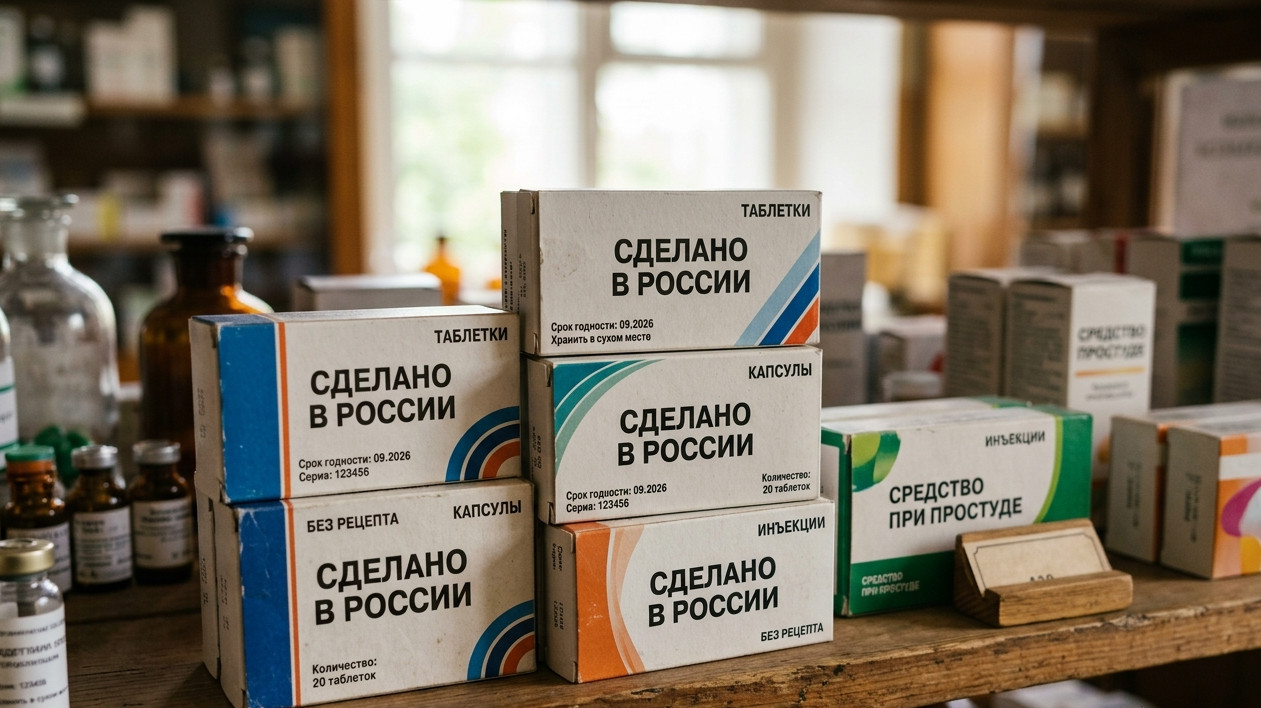
The Crimea officially re-unified with Russia three years ago; over that period, significant changes have occurred in the peninsula’s economy, including the pharma market. The government procurement of pharmaceuticals increased five-fold while becoming 100% Russia-oriented as no Ukrainian or any other imported drugs are being purchased any longer. The Crimean medical officials speak about the government procurement leaders as well prospects of this new Russian region in terms of the pharma market.
[PharmVestnik # 09, 21/03/2017, p. 2]
36.6 Group paid off a debt totaling 900 m RUB
In the economic recession period, the 36.6 Group’s shareholders followed a high-risk strategy acquiring troubled companies one after another. Their first acquisition was Pharmacy Chain 36.6 by itself that has changed the owners and merged with A.v.e; the next acquisition was Oriola and its pharmacies; still next was Pharmacy Chain A5. These acquisitions intrigued pharma market players as everyone wondered whether the new owners would be able to keep all assets they had acquired. However, it was the creditors who had the keenest interest as they had to get their money back. The payment obligation settlement process is underway. The biggest question is “Where the money comes from?”
[PharmVestnik # 09, 21/03/2017, p. 3]
Pharma companies were recommended to participate in educational events as charity providers only
Pharma companies take an interest in the new continuous medical and pharmaceutical education system launched in Russia. Of special interest is the part of this system that provides for holding the events where pharmacists and physicians get their scores required to prolongate their accreditation certificates. Evidently, businesses think that thus they will be able to find loopholes to promote their products. Core professional associations realize that as well. The AIPM has developed recommendations on the interaction between pharma companies and education providers. This document strictly regulates pharma business participation in this process.
[PharmVestnik # 09, 21/03/2017, p. 4]
Pharmacists not always dispense drugs strictly to INNs
In autumn 2016, Ipsos Healthcare conducted a syndicated research Pharma-Q including behavior of 1516 pharmacists in 27 Russian cities. The analysts have revealed that pharmacists frequently sell drugs not in accordance with the INN prescribed.
[PharmVestnik # 09, 21/03/2017, p. 5]
GPP ex-President to lead marketing at a small pharmacy chain
On March 6th, Konstantin Tiunov, Good Pharmacy Partners (GPP) ex-President, took office as Director of Marketing and Advertising Department at pharmacies Unipharma and Rosapteka. Now Mr. Tiunov is to develop and implement a marketing strategy for a small pharmacy chain. PharmVestnik interviewed him on his plans and prospects at his new workplace.
[PharmVestnik # 09, 21/03/2017, p. 6]
Pharma community debates on preference tools change initiative
Federal Antimonopoly Service (FAS) Director Igor Artemyev spoke for the abatement of the “odd-man-out” regulation in the government procurement and proposed introducing a 15—20% price preference instead. FAS officials think that the Russian budget pays a too high price for keeping foreign pharmaceutical manufacturers from bidding. It is to be recalled that earlier the FAS criticized the three-stage preference system supporting procurement of local API-based drugs – also on the grounds of the absence of budgetary benefits. PharmVestnik asked experts about the strength of the FAS arguments in favor of the abatement of the “odd-man-out” regulation and three-stage preference system.
[PharmVestnik # 09, 21/03/2017, p. 9]
MoH finalized alcoholic tincture dispensing rules
The struggle against pharmacy alcohol addiction at last has taken shape. The idea of transferring alcohol drugs into the Rx category was rejected. At the same time, the Russian Ministry of Health approved the capacity of containers for alcoholic tinctures and restricted the number of alcoholic tincture units dispensed to a customer. Earlier, it was prohibited to sell such tinctures from vending machines. The latter was unanimously supported by the pharma community, whereas the efficacy of the former two raised doubts.
[PharmVestnik # 09, 21/03/2017, p. 11]
Threats of IT-supported drug sales
All sales types are drifting towards the Internet, including drug sales. The stricter the authorities and manufacturers in the attempts to control the distribution of a specific drug the higher the probability that such drug will be selling illegally via messengers or the hidden web. Experts speak on the threats posed by IT advances for the pharma market players.
[PharmVestnik # 09, 21/03/2017, p. 12]
The number of Russian pharma M&A’s to grow significantly in 2017
According to Novus Capital, the Russian pharma M&A’s amounted to 1 bn USD as of 2016, a 10x growth year-on-year. It was due to the macroeconomic stabilization in H2 2016. In 2017, the number of M&A will continue growing.
[PharmVestnik # 09, 21/03/2017, p. 18]
Report on government drug procurement, 2016
In Russia, over the decades of the existence of the public healthcare system, a paternalistic relationship system has been rooted in the population’s consciousness. In such system, the patient is excluded from the decision-making process and becomes an object being taken care of by the healthcare system. Possibly, it is the absence in the Russian consciousness of the necessity to plan treatment expenses on one’s own that accounts for an intense interest to the government expenditures associated with drug coverage of different population categories as well as to the fairness of budget allocations.
[PharmVestnik # 09, 21/03/2017, pp. 26-27]
Report on Russian out-of-pocket drug market, 2016
Summing up the out-of-pocket drug market sales as of 2016 provides grounds for forecasting the segment development in spring 2017.
[PharmVestnik # 09, 21/03/2017, pp. 28-29]
Rating of Russian pharmaceutical distributors, 2016
Just two to three years ago, the wholesale drug sector was perceived as long-established and even dull. The market leaders were fighting for tenths of a percent, and diversified slowly. If a company faded away, the reasons were clear, and such development was predictable. However, the financial crisis has changed everything. The top-ranking companies are changing fast; price wars are declared and ended; for some companies, it is about normal to increase their market shares by 2—3% a year. All the above is accompanied by a fast quality development of the distribution companies, active diversification, and numerous deals, including those with foreign investors.
[PharmVestnik # 09, 21/03/2017, pp. 30-32]
Report on major medical device category sales at pharmacies, 2016
Medical devices represent a product range segment characterized by a defined demand level associated with customer needs.
[PharmVestnik # 09, 21/03/2017, pp. 34-35]